Car Insurance in the USA and UK: Coverage, Costs, Quotes, and What Drivers Should Know
e in the USA and UK: Coverage, Costs, Quotes, and What Drivers Should Know
Choosing car insurance is one of those jobs most drivers would rather finish quickly. Yet the cheapest policy on the screen is not always the one that makes the most sense once the details are checked.
The price of car insurance can depend on several things, including the driver’s age, location, driving history, vehicle, annual mileage, claims history and the level of coverage selected. Insurance rules also differ between the United States and the United Kingdom, so a policy that makes sense for one driver may not be suitable for another.
This guide explains the main types of car insurance, what can influence premiums, how quotes work and what drivers should check before buying a policy.
How Car Insurance Works
Car insurance is a contract between a driver and an insurer. In exchange for a premium, the insurer provides specific financial protection described in the policy.
Depending on the policy, that protection can include:
- Damage to another person’s vehicle or property
- Injuries caused to other people
- Damage to the insured vehicle
- Theft
- Fire
- Certain weather-related losses
- Legal or other additional expenses, depending on the policy
The exact protection varies considerably between policies. Drivers should therefore look beyond the headline premium and read the coverage limits, exclusions and excess or deductible.
Car Insurance in the United States
In the US, auto insurance requirements are determined largely at the state level. This means the minimum required coverage in one state can differ from another.
A typical US auto insurance policy can contain several separate forms of coverage.
Liability Insurance
Liability coverage generally helps pay for injuries or property damage for which the insured driver is legally responsible, subject to the policy limits.
Many states require drivers to carry minimum liability coverage, although the required amounts vary.
Collision Coverage
Collision coverage can help pay for damage to the insured vehicle resulting from a covered collision, subject to the deductible and policy terms.
For example, if a driver hits another vehicle or an object, collision coverage may help with repairs to their own car.
Comprehensive Coverage
Despite its name, comprehensive coverage does not mean “everything.” It generally covers certain non-collision losses such as theft, vandalism, fire and specified weather-related damage, depending on the policy.
Uninsured and Underinsured Motorist Coverage
This coverage can provide protection when an insured driver is involved in an accident with a driver who has no insurance or insufficient insurance, depending on state law and the policy.
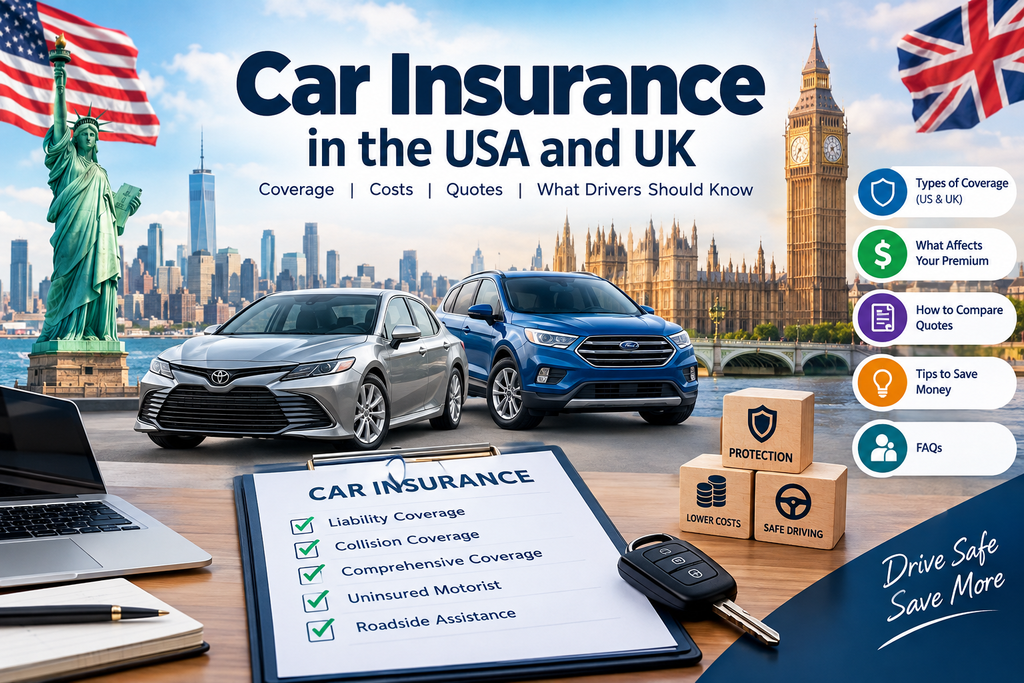
Car Insurance in the United Kingdom
In the UK, motorists must have at least third-party insurance to drive on public roads.
There are three commonly discussed levels of car insurance:
Third-Party
Third-party insurance covers the driver’s legal liability for injury to other people and damage to their property, subject to the policy terms.
It does not normally cover damage to the driver’s own vehicle.
Third-Party, Fire and Theft
This generally provides third-party protection while adding cover for losses involving fire or theft, according to the policy.
Comprehensive
Comprehensive insurance generally provides broader protection and may cover damage to the insured vehicle as well as third-party liabilities.
However, “comprehensive” does not mean every possible loss is automatically covered. Exclusions, excesses and policy conditions still apply.
What Determines the Price of Car Insurance?
There is no single price that applies to every driver.
Insurers assess risk using information about the driver, vehicle and circumstances. Factors can include:
Driving history: Previous accidents, claims and certain driving convictions may affect premiums.
Age and experience: Younger or less experienced drivers can face different pricing because insurers may consider their risk profile differently.
Location: Where a vehicle is normally kept and driven can influence pricing because accident, theft and repair risks vary between areas.
Vehicle: The make, model, age, engine characteristics, repair costs and security features can all be relevant.
Annual mileage: Someone who drives a few thousand miles a year may present a different risk profile from someone who drives extensively.
Claims history: Previous claims can affect future premiums depending on the circumstances and insurer.
Coverage level: Increasing coverage or selecting lower deductibles/excesses can change the cost.
Why Comparing Car Insurance Quotes Matters
Insurance companies do not necessarily price the same driver identically.
Two insurers can look at the same driver and vehicle but produce different quotes because they use different underwriting models, pricing factors and assumptions.
When comparing quotes, look at more than the monthly payment.
Check:
- Coverage limits
- Deductible or excess
- Included benefits
- Exclusions
- Optional coverage
- Cancellation fees
- Claims process
- Courtesy or replacement vehicle arrangements
- Legal assistance, where applicable
- Payment frequency and total annual cost
A policy with a slightly higher premium may have materially different coverage from a cheaper policy.
Monthly Payments vs. Paying Annually
Some insurers allow customers to pay monthly rather than paying the full premium upfront.
Monthly payments can make budgeting easier, but the total amount paid over the policy period may differ from the annual payment amount.
Before choosing monthly instalments, check the total cost of the policy rather than looking only at the monthly figure.
How to Potentially Reduce Insurance Costs
There are several legitimate ways drivers may be able to reduce their insurance costs.
Compare Multiple Quotes
Shopping around can reveal meaningful differences between insurers.
Review Your Coverage
Make sure the policy reflects your actual needs. Paying for unnecessary optional extras may increase the overall cost.
Consider the Deductible or Excess
A higher deductible in the US or excess in the UK can sometimes reduce the premium, although it also means paying more yourself when making a covered claim.
Only choose an amount you could realistically afford if an accident occurred.
Improve Vehicle Security
Security devices and secure parking may affect insurance pricing with some insurers.
Keep Your Information Accurate
Mileage, address, vehicle use and driver information should be accurate. Providing incorrect information can create problems when making a claim.
Car Insurance and Credit History
Credit-related insurance pricing can be complicated.
In some US states, insurers may use credit-based insurance information as one factor in determining premiums, subject to applicable state rules. The practice and regulations vary by jurisdiction.
UK motor insurance pricing is based on different factors and should not simply be treated as equivalent to the US system.
Because regulations change and vary by location, consumers should check the rules applicable to their state or UK circumstances.
What Should You Check Before Buying a Policy?
Before accepting an insurance quote, take a few minutes to check the policy details.
Ask yourself:
- What exactly is covered?
- What is excluded?
- How much is the deductible or excess?
- What are the liability limits?
- Is roadside assistance included?
- Is a replacement vehicle included?
- How does the claims process work?
- Are there restrictions on who can drive the vehicle?
- Does the policy cover business use if required?
- What is the total cost over the complete policy period?
These questions can prevent an attractive-looking quote from becoming an expensive surprise later.
Car Insurance for New Drivers
New drivers often have fewer years of driving history, which can affect the price of insurance.
Young drivers may want to compare several providers and investigate available safety or telematics programs. Some insurers offer usage-based insurance programs that use driving information to assess risk.
The availability and rules for these programs vary by insurer and jurisdiction.
Final Thoughts
Car insurance is not simply about finding the lowest premium. The important comparison is between the price, coverage, limits, deductible or excess and exclusions.
For drivers in the US, state-specific insurance requirements are an important starting point. For UK drivers, the required minimum level of third-party insurance is only the beginning of the comparison.
Before purchasing a policy, compare several quotes and read the policy documents carefully. A few extra minutes spent checking the details can make it easier to understand what financial protection you are actually buying.
Frequently Asked Questions
Is comprehensive car insurance always better?
Not necessarily. Comprehensive policies generally provide broader protection, but the appropriate level depends on the driver’s circumstances, vehicle and budget.
Can car insurance prices change at renewal?
Yes. Premiums can change when a policy is renewed because insurers reassess pricing factors and market conditions.
Is the cheapest car insurance quote the best option?
Price alone does not show the complete value of a policy. Coverage limits, exclusions, deductibles or excesses and additional benefits should also be compared.
Can I change car insurance companies?
In many cases, drivers can switch insurers, but cancellation rules and fees can apply. Check the existing policy before cancelling.
Does location affect car insurance?
Yes. Insurers can consider location because accident, theft, repair and other risks can vary between areas.